Showing posts with label Kenyan history. Show all posts

Tuesday, September 27, 2022

The Legacy of Violence of the British Empire

Queen Elizabeth II in Nigeria
The recent death of the late British monarch, Queen Elizabeth II, has caused many to reflect on the legacy of violence of the British Empire.  The Empire, and the violence associated with it,  continued into the reign of Elizabeth II.  Millions of people in Africa, India and many other places were on the receiving end of this violence, and had their homes destroyed and their lives disrupted.  Many lost their lands and their livestock, as the British settlers took them by force.  And many lost their lives.  

.  

One important question which arises at this time is, how much did the late monarch actually know about what went on?  Churchill is quoted as saying, in the early 20th century, that it was a good thing the House of Commons don't know what they were doing [in Kenya].  "If they did, our East Africa programme would be under a cloud".   

Kenyans had written to Parliament many times, but received no response.  For more about this, see the documentary, Kenya, White Man's Country.   

Here are two more documentaries on this subject:  

​Kenyan History: The European Invasion! (1890 - 1930) [African History]

​Kenyan History (Part 3): The Empire Strikes Back [1952 - 1960]

​

WARNING:   All of these documentaries contain disturbing images and information.  


On at least one occasion, it is known that Her Majesty was lied to about this situation. 

I have blogged about the role of the Empire in Kenya, where thousands of Kenya were killed during the "Emergency".  

For more about this, see:  The First Grader.  

Go here for an article on the Empire and how it is still impacting on African people today.  

Go here for more blogs about African history.  

Go here for more blogs about Black history.  


Monday, December 20, 2021

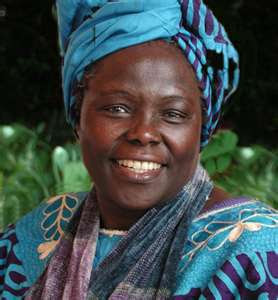
Wangari Maathi Planted Millions of Trees as a Form of Resistance and Empowerment

Wangari Maathi
Check out this piece on Wangari Maathi, The Woman Who Planted Millions of Trees.  As a child growing up in Kenya, she saw the colonial settlers chop down trees in order to grow cash crops such as tea.  Later on after colonisation effectively ended, she saw Kenyans do the same thing in order to survive.  

At that time, girls were rarely educated, but Maathi's mother made sure she got an education.  

I found this piece very inspiring, and I trust that you will, too.  

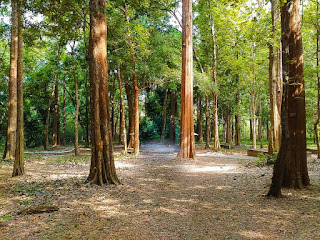
Trees connect us to something elemental in nature, and to our own elemental nature.  


For more about trees, check out this poem by Ursula K. LeGuin, and this one by Mary Oliver.  

What is your relationship with trees like?  Please post your answer below and please share this with your networks.  Thanks.  


Saturday, July 30, 2011

Black History Film: The First Grader

As I stated in Historic Victory for Kenyans/The Mau Mau, four elderly Kenyans have been granted the right to sue the UK government. Given these recent developments, the screening of this film I attended in London was very timely.

The First Grader tells the story of Maruge, an elderly Kenyan man who has never learned to read and write, and who decides to go back to school.

Maruge has received a letter from the government and wants to read it for himself. In the course of the film, we catch glimpses of what he suffered at the hands of the British – his imprisonment and torture and the killing of his family during the “Mau Mau” uprising of the 1950s.

The First Grader graphically depicts the lack of knowledge of subsequent generations, who don’t understand what he fought for, or what he is fighting for now.

When I told my 90-year-old dad that the subject of this film was a man in his eighties, he immediately replied, "That's wonderful!". This was my response as well.

So I was shocked to see the reactions of some of the locals, who resented the fact that Maruge was going back to school, even though he was not taking resources away from any children. This showed how far the African tradition of respect for the elders has been eroded.

Some even assumed the headmistress, played by Naomie Harris, was being bribed to educate this senior learner.

This film is a must-see for those who, like many, know little or nothing about the history of Kenya under colonisation.

After the screening, we had a panel discussion which included one of the lawyers representing the elderly Kenyans who have just been granted the right to sue the British government. For more about this, see: Historic Victory for Kenyans/The Mau Mau

The screening was held before that decision had been reached. The panel explained that the UK government had, for many years, denied the existence of any documentation about what had happened in Kenya.

Then an archive was discovered which contained documentary evidence of what was done in Kenya and many other countries under British colonisation.

Thus the decision was granted. We will be discussing this on What U Need to Know on Saturday the 13th of August, as part of our discussion of African Emancipation Day. Click here to join us or go to Success Strategies for Black People on Facebook.

See also: Africa and Africans on Film

Friday, July 22, 2011

Historic Victory for Kenyans/The Mau Mau

Four Kenyan ex-members of the so-called Mau Mau resistance have won the right to sue the British government.

The British invaded Kenya in the early 20th century and committed atrocities against the Kenyan people for decades. After many years of nonviolent resistance, many Kenyans felt they had to resort to violent action - similar to what happened on South Africa and Zimbabwe.

The British named the resistance movement "Mau Mau" in order to make them sound foreign and exotic - they called themselves the Land Freedom Army.

In a test case, four elderly Kenyans have now been granted the right to sue the UK government. I shall be blogging more about this soon. Click here to read more about this historic victory.

I have personally seen documentary footage of some of the atrocities committed by the British in Kenya - just one of the many African countries which were invaded by European countries in the late 19th and early 20th centuries. Click here to read more about the British colonial presence in Kenya.

President Obama's Kenyan grandfather was one of the many who loyally served in the British army during the Second World War - only to be imprisoned and tortured when he later expressed support for the resistance movement.

This legal decision means the fight for justice can now be taken to the next stage.