Showing posts with label Kenya. Show all posts

Tuesday, September 27, 2022

The Legacy of Violence of the British Empire

Queen Elizabeth II in Nigeria
The recent death of the late British monarch, Queen Elizabeth II, has caused many to reflect on the legacy of violence of the British Empire.  The Empire, and the violence associated with it,  continued into the reign of Elizabeth II.  Millions of people in Africa, India and many other places were on the receiving end of this violence, and had their homes destroyed and their lives disrupted.  Many lost their lands and their livestock, as the British settlers took them by force.  And many lost their lives.  

.  

One important question which arises at this time is, how much did the late monarch actually know about what went on?  Churchill is quoted as saying, in the early 20th century, that it was a good thing the House of Commons don't know what they were doing [in Kenya].  "If they did, our East Africa programme would be under a cloud".   

Kenyans had written to Parliament many times, but received no response.  For more about this, see the documentary, Kenya, White Man's Country.   

Here are two more documentaries on this subject:  

Kenyan History: The European Invasion! (1890 - 1930) [African History]

Kenyan History (Part 3): The Empire Strikes Back [1952 - 1960]

WARNING:   All of these documentaries contain disturbing images and information.  


On at least one occasion, it is known that Her Majesty was lied to about this situation. 

I have blogged about the role of the Empire in Kenya, where thousands of Kenya were killed during the "Emergency".  

For more about this, see:  The First Grader.  

Go here for an article on the Empire and how it is still impacting on African people today.  

Go here for more blogs about African history.  

Go here for more blogs about Black history.  


Monday, December 20, 2021

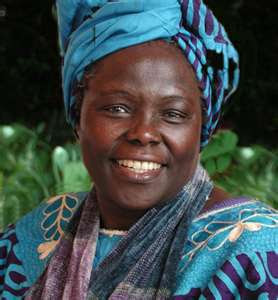
Wangari Maathi Planted Millions of Trees as a Form of Resistance and Empowerment

Wangari Maathi
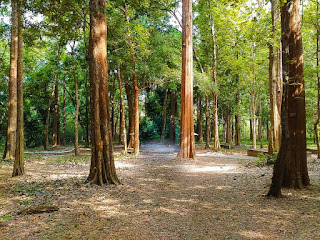
Check out this piece on Wangari Maathi, The Woman Who Planted Millions of Trees.  As a child growing up in Kenya, she saw the colonial settlers chop down trees in order to grow cash crops such as tea.  Later on after colonisation effectively ended, she saw Kenyans do the same thing in order to survive.  

At that time, girls were rarely educated, but Maathi's mother made sure she got an education.  

I found this piece very inspiring, and I trust that you will, too.  

Trees connect us to something elemental in nature, and to our own elemental nature.  


For more about trees, check out this poem by Ursula K. LeGuin, and this one by Mary Oliver.  

What is your relationship with trees like?  Please post your answer below and please share this with your networks.  Thanks.  


Saturday, October 01, 2016

African History Blogs

Nelson Mandela and Family
I have listed some of my African history blog posts below.

See also:  Black History Blogs.    

Please note, I DO NOT distinguish between Black history and African history, but I have listed them separately because I know that this distinction matters to some people.

When we learn about what has happened, what has been done to people, on the African Continent and in the Diaspora, it is clear that it is all the same story. We are one people. 

Benin bronze
Please share these with your networks, and particularly with parents, children and young people, and teachers and schools.  Please leave your comments on the individual posts

And remember, EVERY MONTH IS BLACK HISTORY MONTH/AFRICAN HERITAGE MONTH.   

African History: Invasion 1897 - this links to some of my other African history blogs 
including blogs about Kenya, Namibia and the Congo..


The Sowetan:  Jumping the Border for Water

Sweet Crude - The Niger Delta


World War One:  The Crucial Battle for Togo 


See also:   Black History Blogs

Please share these with your networks and please leave your comments on the individual posts.  Thanks.

Thursday, October 06, 2011

Wangari Maathai, Warrior Woman


I want to share this great blog about Wangari Maathai, a Kenyan woman who has been active in the environmental movement for many years. She was awarded the Nobel Peace Prize in 2004 for her work in the Green Belt Movement.

Often, the environmental movement has operated in a way that is very Eurocentric, and has marginalised and excluded African people and other people of colour.

This blog about Kibera describes some of the conditions endured by people in Kenya, and the way these conditions have been exploited by Europeans.

Anna Renee's blog underlines points I have made on this blog many times - that we need to tell our own stories and that we, as African people all over the world, need to network with each other. We need to share our stories. We need to communicate with each other and educate ourselves about each other's lives.

Long may this continue.

Please leave your comments below.

Saturday, July 30, 2011

Black History Film: The First Grader

As I stated in Historic Victory for Kenyans/The Mau Mau, four elderly Kenyans have been granted the right to sue the UK government. Given these recent developments, the screening of this film I attended in London was very timely.

The First Grader tells the story of Maruge, an elderly Kenyan man who has never learned to read and write, and who decides to go back to school.

Maruge has received a letter from the government and wants to read it for himself. In the course of the film, we catch glimpses of what he suffered at the hands of the British – his imprisonment and torture and the killing of his family during the “Mau Mau” uprising of the 1950s.

The First Grader graphically depicts the lack of knowledge of subsequent generations, who don’t understand what he fought for, or what he is fighting for now.

When I told my 90-year-old dad that the subject of this film was a man in his eighties, he immediately replied, "That's wonderful!". This was my response as well.

So I was shocked to see the reactions of some of the locals, who resented the fact that Maruge was going back to school, even though he was not taking resources away from any children. This showed how far the African tradition of respect for the elders has been eroded.

Some even assumed the headmistress, played by Naomie Harris, was being bribed to educate this senior learner.

This film is a must-see for those who, like many, know little or nothing about the history of Kenya under colonisation.

After the screening, we had a panel discussion which included one of the lawyers representing the elderly Kenyans who have just been granted the right to sue the British government. For more about this, see: Historic Victory for Kenyans/The Mau Mau

The screening was held before that decision had been reached. The panel explained that the UK government had, for many years, denied the existence of any documentation about what had happened in Kenya.

Then an archive was discovered which contained documentary evidence of what was done in Kenya and many other countries under British colonisation.

Thus the decision was granted. We will be discussing this on What U Need to Know on Saturday the 13th of August, as part of our discussion of African Emancipation Day. Click here to join us or go to Success Strategies for Black People on Facebook.

See also: Africa and Africans on Film

Friday, July 22, 2011

Historic Victory for Kenyans/The Mau Mau

Four Kenyan ex-members of the so-called Mau Mau resistance have won the right to sue the British government.

The British invaded Kenya in the early 20th century and committed atrocities against the Kenyan people for decades. After many years of nonviolent resistance, many Kenyans felt they had to resort to violent action - similar to what happened on South Africa and Zimbabwe.

The British named the resistance movement "Mau Mau" in order to make them sound foreign and exotic - they called themselves the Land Freedom Army.

In a test case, four elderly Kenyans have now been granted the right to sue the UK government. I shall be blogging more about this soon. Click here to read more about this historic victory.

I have personally seen documentary footage of some of the atrocities committed by the British in Kenya - just one of the many African countries which were invaded by European countries in the late 19th and early 20th centuries. Click here to read more about the British colonial presence in Kenya.

President Obama's Kenyan grandfather was one of the many who loyally served in the British army during the Second World War - only to be imprisoned and tortured when he later expressed support for the resistance movement.

This legal decision means the fight for justice can now be taken to the next stage.

Wednesday, March 16, 2011

Lenny Henry in the Slums


Comedian Lenny Henry has done a great deal of work for charity over the years. Through Comic Relief, he has travelled to some of the poorest parts of Africa to help raise money for those living there.


This time was different, though. He found himself in Kibera, one of the largest and poorest slums in the world, near Nairobi, Kenya.

Kibera houses approximately one million people in a one and a half square miles. Most of these people live in extreme poverty.

The slum is appallingly filthy, but Kiberans somehow manage to keep their homes spotlessly clean. They mostly live in corrugated iron shacks, and one toilet may be shared by anything up to fifty families.


Along with three other celebrities, Henry went to live in Kibera to raise awareness for Comic Relief. He stayed with a family of orphans who were looked after by their 16-year-old brother, the eldest of five.

Henry started by saying he had seen places like this many times before, but having spent the night there, said he had never seen anything this bad. He described it as "hell".

The children lived in one room, next door to an open toilet which regularly overflowed, causing raw sewage to flow through the children's room.

Henry broke from the rules of the documentary to use his own funds to buy the children another house to live in.

It was very moving to see Lenny Henry crying at the sight, and smell, of the children's living conditions. However, shame on Comic Relief for finding them and leaving them there to film. Why didn't Comic Relief move those children out of there? This is very exploitative.

Shame on you, Comic Relief. Shame.

I have never been a fan of reality TV, and this show did not make a fan of me.

In the end, all four celebrities helped the people they were staying with, and I found this very inspiring.

Tuesday, March 11, 2008

Kenya's Colonial Past

I recently watched two historical films about Kenya, in a showing by the 100 Black Men of London.

The first one, “A Country for White Men”, depicted what happened from the time the British arrived, in the early 20th century, until they left in the 1960s. Although I knew a lot of what the film depicted already, I didn’t know the details.

The British arrived and started grabbing the best –quality farmland for themselves, as the Europeans did in South Africa, Zimbabwe and presumably many other countries as well.

They massacred hundreds, if not thousands, of people in order to steal their land. At one point, Winston Churchill expressed concern about how many African people were being slaughtered. He also said that, if the House of Commons got wind of what was happening, the British plans for Kenya would have to be scrapped.

Kenyans who were interviewed in the film said that they only had spears against the guns of the British, so although they fought back, they could not win. One man said that if the British had come with swords rather than guns, it would have been a different story.

The attitude of the British was that they were bringing British values into what would become a ‘new country’, and they considered this to be a good thing.

Those Kenyans who were not massacred by the British were made homeless and forced to do menial jobs for the white settlers.

We heard one white person remarking that the Kenyans had never done any work a day in their lives until then. So what were they doing on their farmland for all those generations before the white settlers arrived?

This reminds me so much of what happened in the Americas. The white people arrived, slaughtered the original people and stole our land. My father, who is part Cherokee, told me this story from the time I was a young child. But although I knew it happened in many parts of Africa as well, it was useful to be given specific information about what happened.

Teddy Roosevelt, when he visited Kenya, described it as a ‘playground’ and said that the people who did well there were the same people who had done well in the Old West forty years earlier.

During the First World War, Kenyans were forced into the British Army where they again did menial jobs. Hundreds of them died of starvation and disease. They were told they were fighting the Germans, who were occupying a neighbouring country which bordered with Kenya, and that they were fighting to secure their own country. But after the war, they were still confined to menial jobs and continued to be ruled by the British.
For many years, the Kenyans formed political parties to fight the British, and petitioned the British government, but their needs were ignored by the colonial rulers. At one point, members of one Kenyan political party were slaughtered at an anti-colonial demonstration. The Kenyans’ political parties were outlawed by the colonials.

Eventually, after many years of trying to achieve their aims of independence and self-determination through nonviolent means, the so-called Mau Mau were formed, which used violence.

I have seen another film about the ‘Mau Mau’, in which one man explained that, if a Black man were walking down the street and saw a white man, the Kenyan was supposed to stop and say ‘good morning’ and tip his hat. If the Kenyan failed to do this, the white man would beat him. And if the Kenyan defended himself, he would be arrested.

At last, after more than 60 years of colonisation, the British left Kenya to independent rule.

The next film was called ‘Mau Mau’.

The first thing this film clarified was that ‘Mau Mau’ is a term that means nothing in any Kenyan language. It was a term that was made up by white people. The Kenyans called themselves the Land Freedom Army. Clearly, if that had been widely known outside of Kenya, there might have been a lot more international support for the Kenyans’ aims and criticism, if not condemnation, of the colonial rulers.

After many years of killing people and displacing Kenyan people into what were effectively concentration camps, there was a scandal when some of the people in the camps were taken out into the bush by British Army personnel who tried to force them to work, digging ditches. I had seen a film about this before. The Kenyans refused to do this work – their attitude was, “We are not slaves, why should we work for the British?”.

The soldiers were then ordered to beat the Kenyans with their rifle butts, which they did. Some of the Kenyans died as a result of their injuries, and others were badly injured. The British then put out the story that these Kenyans had died as a result of drinking bad water.

Charities sent helicopters to airlift out these Kenyans who were supposedly ill, and found that they had injuries which were not consistent with having drunk bad water. When what really happened came out, it was the beginning of the end of the British colonial occupation of Kenya.

After the second film showing, a Kenyan man gave some up-to-date information. He explained that the people who run the safaris and make a lot of money from tourism are white people who live in Kenya (as I have been told, these people consider themselves to be Kenyans).

Again, I thought what he was saying was obvious, but it probably is not obvious for some people, so it’s useful to be told this information. We see similar situations in South Africa and many other places that were colonised by European powers.

When we see these stories in the news of the instability and unrest in Kenya and the violence around the recent elections, it is important to have a historical perspective. The instability of the country can be traced back to the fact that it was invaded and occupied by the British for many years, and they took people off their land, which destabilised the local economy, displaced Kenyan people, killed them, forced them to do menial jobs and denied them any kind of political voice.