Showing posts with label Africa. Show all posts

Wednesday, August 20, 2025

Exiled to Poland for 28 Years

George Lee, Windrush Scandal Survivor
When George Lee approached MPs and the UK Home Office for help with his immigration status, they failed to assist him.  This was in 2018, when the Windrush scandal was emerging.  

Mr. Lee was among the thousands of British citizens from Africa and the Caribbean who had lived in Britain since childhood, but were misidentified as illegal immigrants after the Home Office destroyed their immigration documents.  Mr. Lee was working as a teacher in Poland at that time.  

Last November, he approached Desmond Jaddoo, a Windrush campaigner in Birmingham, who helped him to access the assistance he needed to return home.  He still has not received the pension payments which he was entitled to claim from the time he turned 65, eight years ago.  

Mr. Lee reckons there are many more people stuck in different countries who have not been able to return to Britain, and are largely unknown.  They continue to be ignored by the UK government unless they receive help from campaigners like Mr. Jaddoo, as the Home Office appears to be deaf to their pleas.  

Mr. Lee is now struggling to adjust to life in his home country, which he has not seen for nearly 30 years.  Go here to read more.   


Monday, October 28, 2024

Activity Report on the Training Workshop in at Mtima Village (Malawi) on Gender-Based Violence

Workshop on Gender Violence in Malawi
When the Week of Nonviolence (now the Month of Nonviolence) first started, it was very focused on activities and events in the U.S.A.  I had to keep reminding us that violence happens everywhere, and that Black Women for Positive Change is a global movement. 

I am delighted that we are now receiving reports on activities during the Month of Nonviolence from further afield, including Nigeria and this one from Malawi.  Sisters, we stand united with our brothers in our commitment to nonviolence and peace.  

You may also be interested in this interview with Mercy Mekinde, a Nigerian woman who helps women escape from domestic violence.  


Harmony for Families and Communities have held a workshop
in Malawi on gender-based violence.  

I will not reproduce the entire report here, but I have focused on some of the highlights.  You can request a copy of the full report from harmonyforfamiliesandcommuniti@gmail.com 

Brief Background

Harmony for Families and Communities (HFC) is a local Malawian organization based in Zomba and started operating in March 2021.

Harmony for Families and Communities supports various women, girls and child focused initiatives through a holistic approach that makes it able to cover different challenges that affect their development in the community. This approach identifies and addresses both mental and physical needs that are essential for a healthy future generation.

All projects and programs that HFC initiate are designed in a way that the direct beneficiaries are women, girls and children.  This is what is needed to bring about positive change.  

41 participants attended the workshop.  It was led by local officials.  

Event Key Highlights

Participants demonstrated increased understanding of the distinction between gender and sex, gender-based violence forms (physical, emotional, economic, negligence and psychological). 

Facilitators provided information on reporting procedures and mechanism such as the toll free numbers (116), support services like the One Stop Centre and legal recourse like the Protection Order, Whistle Blowing

Participants discussed cultural practices and societal attitudes that perpetuate gender-based violence such as women shielding their husbands, the silence culture and beliefs that men are the ones that are breadwinners. 

Participants discussed the dangers, implications and the legal framework of gender-based violence such as the Constitution of Malawi (Chapter 4), The Prevention of Domestic Violence Act, The 50, 50 Campaign, The Child Protection Act, and The Penal Code among others.  

Community members identified local gender-based violence hotspots and pledged to establish a community watchdog committee.

Challenges and Lessons Learnt 

 Limited time for in depth discussions 

  • Need for sustained follow up and support 
  •  Importance of involving local leaders and traditional authority
For a copy of the full report, please contact Harmony for Families and Communities at harmonyforfamiliesandcommuniti@gmail.com 
 
Well done, sistas and brothas!  You should be very proud of the work you have done.  Keep up the good work!  


Tuesday, June 18, 2024

Global Conflict - What Can We Do to Help?

Sudanese Refugees in Chad
It breaks my heart to read of conflicts occurring in African countries such as Burkina Faso, DRC, Nigeria and Sudan, and others, and those among people of African heritage, including in Yemen and Haiti.  Plus the conflicts we hear about every day, such as those in Gaza and Uraine.  Vast numbers of people are being displaced as a result. 

We're in a New Era of Conflict and Crisis - this article focuses on the exploding need for aid amidst dwindling funding resources.  Last year, more than 360 million people worldwide needed humanitarian assistance.

Although aid has a significant role to play, my focus is on preventing and resolving conflicts.  

We need to find solutions, and Nonviolent Communication (NVC) can be part of the solution.  

NVC is based on empathy.  

Please help me to spread the word, helping more people to learn and apply NVC skills to prevent and resolve global conflicts.  Please submit a blog post to the Blogging Carnival for Nonviolence 2024.  

Conflict often begins in the home, and children who experience violence in the home are more likely to get involved with conflict outside the home.  Go here to download my NVC Worksheet for Parents.  

What are your thoughts about preventing and resolving global conflicts?  Please comment below and please share this with your networks.  Thanks.  


Monday, December 20, 2021

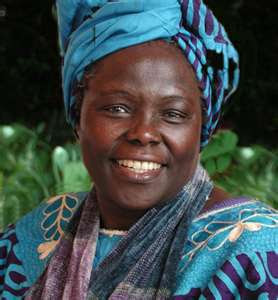
Wangari Maathi Planted Millions of Trees as a Form of Resistance and Empowerment

Wangari Maathi
Check out this piece on Wangari Maathi, The Woman Who Planted Millions of Trees.  As a child growing up in Kenya, she saw the colonial settlers chop down trees in order to grow cash crops such as tea.  Later on after colonisation effectively ended, she saw Kenyans do the same thing in order to survive.  

At that time, girls were rarely educated, but Maathi's mother made sure she got an education.  

I found this piece very inspiring, and I trust that you will, too.  

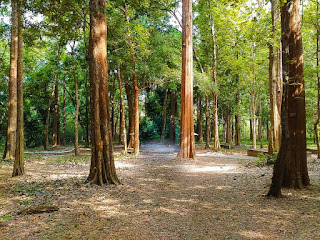
Trees connect us to something elemental in nature, and to our own elemental nature.  


For more about trees, check out this poem by Ursula K. LeGuin, and this one by Mary Oliver.  

What is your relationship with trees like?  Please post your answer below and please share this with your networks.  Thanks.  


Tuesday, April 02, 2019

Wealth-Building for Black Folks

Black Wealth Matters
The purpose of the books and ebooks I have written and published, and many of the blogs I have posted, is to help you to achieve your goals.  If you want to build wealth, pay attention!  This is the stuff they don't want us to know! 

Many of the resources I have posted are specifically for Black folks, i.e. people of African heritage.  Plus I have other resources for everyone - including people of African heritage.  

I am listing a few of my wealth-building resources below.  When I say you can learn how to achieve any goal, I really do mean ANY goal.  We each have a strong connection to the universe.  We need to get out of our own way!  These are resources to help us build successful, prosperous Black families and communities. 

I am committed to helping Black people to achieve our highest potential.  This is part of my commitment to global prosperity and global peace.  

I am a member of the global Black community.  If you are on the African continent or in the Diaspora -  wherever you are in the world - I am speaking to you right now.  If you are a parent, teacher or educator, if you are a business owner, pay attention!  This is the stuff they don't want us to know! 

What are you doing to build wealth - for yourself, for your family and for your community?  Please comment below.  

Please share this blog post with anyone who can benefit from it. 

Here's to your success!  

Achieving Success, with your 3-Step Success Formula

How to Get Clear, Precise Answers 

How to Get the Results You Want 

Black Success Audios 

Nurture Success 

Go here for a FREE, no-obligation consultation


Wednesday, February 28, 2018

What Does The Black Panther Movie Tell Us about Black People?

The Black Panther Warrior Women
The Black Panther movie tells us a great deal about Black/African people, psychology, traditions and potential.  I saw the film last night and I enjoyed it immensely. It is doing brilliantly at the box office, breaking all kinds of records, as well it should. 
 
Lest we forget, the first Marvel comic films were the Blade trilogy, which did so well at the box office that they enabled Marvel to bankroll all the other superhero films they subsequently produced, yet, somehow, they have been left out of the Marvel narrative.

Further, lest we forget, Black filmmakers, notably Oscar Michaux, have been making films giving positive depictions of Black filmmakers since at least 1919.

I have a few quibbles about The Black Panther, as follows (this contains spoilers): 
  • I do not like to see two Black men duking it out as they do in the film, albeit displaying awesome fighting skills;  
  •  I particularly disliked seeing Black men and women fighting each other on the battlefield, and I'm not even sure what they were fighting about; 
  • The brother from U.S. appeared conflicted – he addresses a white woman as “Coloniser” and makes reference to the plunder of African artefacts, yet he partners with a white thief of, and dealer in, such artefacts;
  • Perhaps my strongest objection is to Martin Freeman's role – he plays a duplicitous, double-dealing CIA man (in other words, a CIA man) who allies with the Wakandans and, at the end of the film, is shown in the United Nations like some kind of benevolent paternalistic figure.
Having said all that, the visuals are amazing, the storyline and the depiction of African people as masters of technology are – well, masterful, and The Black Panther offers us a largely positive view of African people and traditions. The Wakandans, from the fictional African state of Wakanda, are depicted as kings, queens and heroes. And the movie is highly entertaining.  
 
The Black Panther is a dazzling sci-fi romp.  I am old enough to remember a time when Black people did not exist in the future, i.e. in science fiction.  So I greatly enjoy this film's strong characters. 


The characters' inner and outer conflicts mirror, to a certain extent, similar conflicting emotions within and among people from the Diaspora and the African Continent. I found this fascinating. 
 
One thing I particularly liked was that the men, and the women, were so beautiful to look at and so strong, brave and fearless. These sistas looked awesome. The characters carried themselves with great pride and dignity and the sistas were warriors, fully ready to throw down. 
 
I need to see this film again, soon, to gain clarity and because it is such great fun!  If you have not seen it yet, see it! 

What did you think of The Black Panther movie?  Please share this with your networks and please leave your comments below. Thanks.  
 

Monday, August 17, 2015

The Sowetan – Jumping the Border for Water

The Sowetan - Jumping the Border for Water
The Sowetan newspaper reports Botswanan women routinely jump the border with South Africa in order to collect water for their families.  You may be able to access it here at The Sowetan e-edition: http://www.pressdisplay.com/pressdisplay/viewer.aspx

This is an artificial border first erected in 1933, which divided a community called Mabule in Botswana .  Now half of Mabule is in South Africa, but the other half is still in Botswana. And they need water. They cross the barbed wire border every day to get it. 

I don't remember hearing about this in The No. 1 Ladies' Detective Agency.   

As you may know, during the European colonisation of Africa, many artificial borders were set up and they often divided communities. There are people in Mabule in Botswana who are now living in a different country from their relatives – all because of an artificial border.

Similar things have happened all over Africa. And this is still affecting people to this day.

Think about the devastation that is being wrought by Boko Haram in Northern Nigeria and reflect on how much of this can be traced to the fact that areas which are now banded together nationally as Nigeria were once separate territories, with their own poitical and economic systems. These existing systems were either eroded or destroyed in order to facilitiate the agendas of the European colonisers. For more about this, check out my blog post:  Invasion 1897.  

For more about the devastating long-term effects of the European colonisation of Africa, see: Black People in the First World War

Please share this with your networks.  Thanks.   

Thursday, October 09, 2014

World War One: The Crucial Battle for Togo

Map of colonised Africa 1914
I watched this very interesting short film on the BBC today. 

The wireless station at Kamina in Togo, West Africa, was a crucial centre for German communications.  Built by a huge workforce of African men and women during the German occupation, the station allowed the German colonisers to communicate with their home country and with Asia.

This is just one of many examples of how African labour, land and resources were exploited by European colonisers during the war. 

See also:  Black People in the First World War

Monday, October 15, 2012

African People Liberated Themselves

The recent presentation from Black History Studies entitled "Slavery Is Not Our History" detailed many of the ways in which enslaved African people liberated themselves and fought against kidnapping, genocide and mass enslavement in Africa, on board the slave ships, on many Caribbean islands, and in South America and the United States. 

My sister, who grew up in the 1940s and '50s, tells me that, when she was growing up, people would say to her that slavery could not have been that bad, because there were no slave revolts.  The schools taught that slaves were happy on the plantations.  The only slave revolt she was told about was that led by Nat Turner. 

Fortunately, our mother taught us from an early age about those who fought for liberation, including Harriet Tubman, Sojourner Truth, Frederick Douglass, Toussaint L'Ouverture and more.  

For more about this presentation, click here for Black History Facts.  As usual, this was a fascinating presentation, packed with loads of information. 

For more about the "Slavery Is Not Our History" presentation, see:  Why Focus on History?  

You may also be interested in  African People's Self-Liberation.  


Thursday, June 14, 2012

South Africa Remixed at the Schomburg

The Schomburg will celebrate South Africa Remixed this Saturday.  The programme will include film, live music and discussions.  

Come Back, Africa, a film shot in secret during apartheid, will be one of the films screened.  Click here to read more.  

Click here for more about South Africa Remixed and other Black history and cultural events.   

This is a free event, but you need to book for it. 

Monday, July 11, 2011

A Great Way to Reach Teachers and Students

If you want to reach school pupils, teachers and educators with your work, Squidoo is a highly effective way to do so.

Get started now so that you will be up and running by the time school starts again in September.

My Black history lenses (articles) are my most popular articles on Squidoo. Sometimes they get hundreds of hits in a month. This is because people are interested in reading and learning about Black history, and Squidoo lenses are an excellent place to begin or expand their research.

Some of my Black history lenses include:

Black History International – This one contains Black history polls and links to other lenses.

London Black History Walks – focus on Black British history

Naij - A Film History of Nigeria

News and Views: ANC Welcomes Ruling - this lens includes reviews of films made in secret under apartheid in South Africa.

I have quite a few more.

Squidoo is one of the online resources people use when seeking information. If your lenses are "G" rated, people of any age can read them.

Squidoo lenses (articles) are highly targetted. This means the only people who visit them are the ones who are interested in your subject.

If you want to become established as an expert in your field, Squidoo is a great way to get started.

Plus, if you have products or services to sell, you can link to them from your Squidoo pages.

Click here to get started for free by building a Squidoo lens.

Click here if you are looking for ideas for things to write about. See also: Write Your Book in Two Days (you can use this for writing articles, essays or blogs).

Click here for more suggestions about how to make your lenses interesting and keep people coming back.

Here’s to your success!

Tuesday, April 26, 2011

Herbert Ekwe Ekwe on the Igbo Genocide and Biafra

Click here to watch some very interesting short videos about Herbert Ekwe Ekwe on the Igbo Genocide and Biafra.

Plus, check out this article on Africa's Hidden Presidents. I do not agree with its portrayal of African women. Most people rejected the portrayal of women exerting power in the bedroom 40 years ago or more.

Further, this article does not reflect the position of most women in Africa. However, it may have some validity.

We will continue to discuss African Networking on What U Need to Know in May. Click here to listen.

Monday, April 04, 2011

African Networking This Saturday 9th April

When we see negative images of Black people in the media, we are rarely given the historical and economic context for these issues.

See: Child Soldiers in the Congo

Lenny Henry in the Slums

The context is that the African continent has been plundered by the West for hundreds of years for its mineral wealth, natural resources and human wealth, all of which are still being exploited today. Japan and China are now getting in on the game, too. Some of the direct consequences of this ongoing exploitation are the extreme poverty and heated conflicts we see depicted on our screens.

The question is, what can we do about this? What can we as African people do to improve the situation and bring about positive change?

On Saturday, on What U Need to Know, we will be discussing African Networking. Click here to listen at 2 p.m. EST/7 p.m. UK time.

Feel free to phone in or join us in the chatroom.

We look forward to speaking with you then.

Friday, October 08, 2010

Motherland Film Screenings

MotherlandThe documentary Motherland was described by The Sowetan as "The Best Documentary on Africa". Directed by the makers of 500 Years Later, Motherland will be screened in London tomorrow (Saturday) and Sunday. Click here for details of these and other BHM events.

Wednesday, February 18, 2009

The Courage of One Man

As I'm sure you are aware, Hotel Rwanda is the story of the courage of one man, Paul Paul Rusesabagina, who stood up as an individual at a time when group mentality threatened his life, and hundreds of thousands of people were killed. Rusesabagina saved the lives of hundreds of people during the Rwandan genocide. There are other stories of individual courage we have not yet been told.

To read more, see Hotel Rwanda.

See also Black History International.

I talk about the individual vs. the group in my ebooks What They Don't Want Us to Know and The Key to Everything.

Monday, September 29, 2008

German Death Camp in Namibia

Warning: Some of the information in this blog is shocking and disturbing.

I saw a very powerful Black History presentation on Saturday at the Imperial War Museum. Tony Warner of 100 Black Men of London presented this audio visual history of Black people who had served their countries in the armed forces, including the two World Wars.

If you have ever been to any of Brother Tony’s presentations, you know they are very good. Highly informative. But he doesn’t just hit you with the facts, although he gives loads of factual information. He also puts it into context.

So usually, when we think of Black people coming from the Caribbean in the 1950s, we think of them finding it hard to find anywhere to live, and experiencing racism at work. We have heard this same story many times before. But Brother Tony contextualised it by saying that many of these people had served in the armed forces. He showed a TV discussion where ex-servicemen and women in the studio spoke of their experiences.

They thought they would be welcomed when they came to Britain. I still find it very hard to get my head around this. After all, they had experienced racism in the armed forces and even in the Caribbean. But for some reason, they thought things would be different when they arrived here.

Anyway, it was an excellent presentation, as we have come to expect from Brother Tony. He also showed film of people in Africa fighting for Germany, France and Britain in the two Word Wars. Again, I find it difficult to comprehend why they did so, when they were treated so appallingly by the European powers. I understand that in Kenya, the British told the Kenyan people they were fighting for their own country. So I suppose they expected that, after the war, they would be treated better. See also:

Kenya’s Colonial Past
http://ancestralenergies.blogspot.com/2008/03/kenyas-colonial-past.html

One thing I did not know was that the first death camp the Germans built was in Africa – in Namibia in the early 20th century, just over 100 years ago. First, the Germans committed a genocide against the Herrera people, wiping out 75% of their population. Then, they built a death camp on a remote island named Shark Island. They shipped the Nama people to Shark Island in cattle cars. In other words, they tried out many of the methods which were later used against the Jews under the Nazi regime.

But these practices were carried out by the German government long before the Nazis came into existence. Hitler was not involved, he came along much later.

Brother Tony showed photographs of Shark Island which showed men, women and children living there in shacks, in slum conditions.

50% of the Nama people were killed at Shark Island. The surviving Nama and Herrera people were sold into slavery to German settlers.

Probably the most disturbing thing for me was that Brother Tony showed photographs of severed heads – on Shark Island, people were decapitated and their heads were studied to try to prove that African people were inferior to Europeans. In point of fact, they sought to prove that African people were animals.

Brother Tony Warner will be a guest on my Success Strategies radio show at some point during October (Black History Month UK), talking about Black British and European history. This will be one of several programmes I will be doing for BHM (African Heritage Month). I hope you will join us. To tune in, visit:
http://www.blacksuccess1.com/radioshow.htm

To find out more about his work and his Black history walks, visit: http://www.blackhistorywalks.co.uk/

Tuesday, August 12, 2008

Africa Will Never Abandon Zimbabwe

African leaders are working together to bring about peace in Zimbabwe. Surely this is wonderful news for everybody on this planet.

White people are criticising them? France will only recognise a government led by Morgan Tsvangirai?

I've said it before and I'll say it again - we need to stop worrying about what white folks think and concentrate on ourselves.

Having said that, I enjoyed this piece.

I am concerned about African people all over the world .

With regard to Senator Obama, what I want to know is, if he is elected President, will this make a real difference to the lives of African Americans? And to the lives of African people everywhere? And if so, what difference will it make?

Obama is sounding to me like he is asking us what we want, not telling us what to want or what to do. I am impressed by this, I must admit.

As the author/publisher of Black Success Stories, I know we can learn from the example of other successful people. What I want to know is, if we vote for Obama, are we really voting for significant change for African people?

I don't have any answers. I only have questions. I want to hear your views. Join my Obama Phone-In Tuesday 19th August. Click here for details.

Friday, December 14, 2007

International Sharing and Communication

It's so important that we, as people of African heritage, share information and communicate with one another. Whether we live in the UK, the U.S.A., Africa, the Caribbean or anywhere in the world, we share common experiences.

I just came across this article. A young student was banned from giving a speech about how the Eurocentic curriculum in his school had damaged him and other Black students: http://www.frostillustrated.com/full.php?sid=1265

Although this happened in the States, it could easily have happened here in Britain and it affects all of us in the Diaspora.

I also just found this link: Basic Black Griot, A Conversation with [the playwright] Wole Soyinka.

The page asks: How would you describe the relationship between Africans and African Americans? Should there be a relationship between the two cultures or is that a “feel-good” sensibility that has no basis in fact?

Check it out and leave your comments.

In my work, I make no bones. I publish work from the UK, the U.S.A., African, the Caribbean and everywhere else there are African people. We did not stop being Africans when they put us into the slave ships.

We must keep dialoguing and communicating with each other. This is vital in order for all of us to survive and thrive.

Click here to read my article on Celebrating Black Heroes and Sheroes.

Click here if you want to submit your article or story.